


What Is Acid Reflux?
Acid reflux occurs when the valve between the esophagus and stomach (cardia) does not close properly, allowing stomach contents to flow back into the esophagus. This can cause burning sensations, discomfort, and digestive problems.
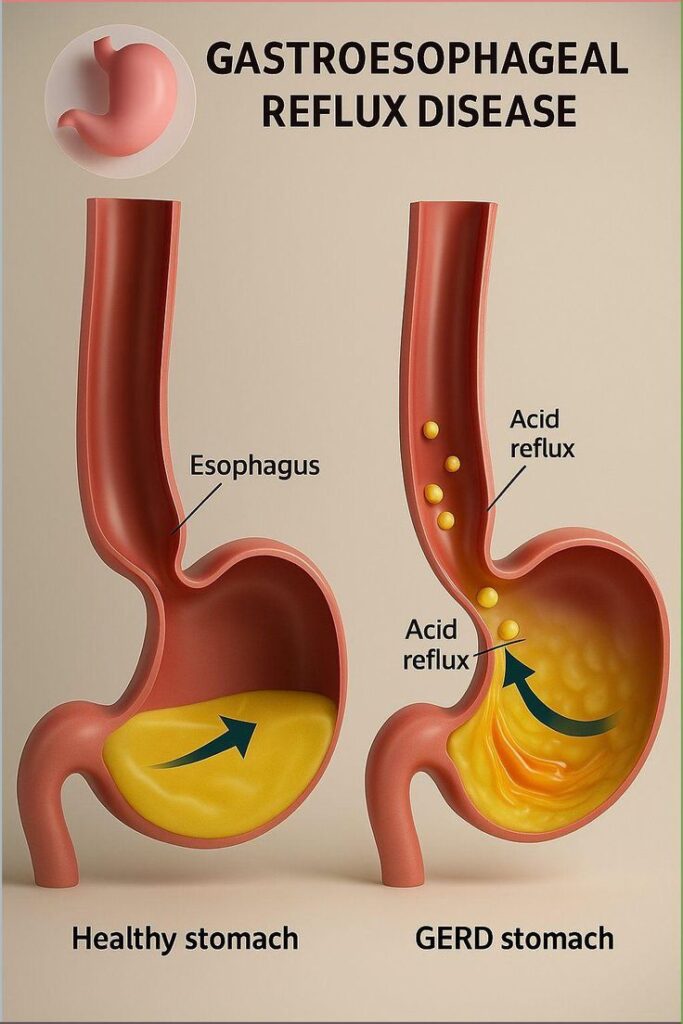
Causes of Acid Reflux
Reflux can result from several factors, including:
Reduced stomach acidity:
In older adults or individuals whose acid-producing cells are less active, stomach acidity decreases. This not only increases reflux but also interferes with protein digestion.Weak esophageal and stomach valve:
This can be congenital or result from deficiencies in magnesium or other nutrients.Overfilled stomach and lying down after meals
Note: The stomach valve closes properly when the stomach pH is between 1 and 2.
How Acid Reflux Develops and Its Effects
Low stomach acid increases reflux and prevents proper protein digestion.
Poorly digested protein can cause nutrient absorption issues, leaky gut, and gastrointestinal symptoms.
In fetuses, insufficient protein digestion may lead to hormonal imbalances, vitamin deficiencies, and impaired muscle development.
Food remaining in the stomach and intestines for long periods encourages bacterial growth, which may cause bad breath and body odor.
Strategies to Strengthen Stomach Acid and Reduce Reflux
Manage water intake:
Avoid drinking large amounts of water immediately before or after meals, as it can dilute stomach acid.Use apple cider vinegar or lemon juice:
Consuming them before meals may help stimulate stomach acid production.Healthy lifestyle habits:
Eat slowly (stress weakens stomach acid).
Ensure adequate sleep and avoid eating at least three hours before bedtime.
Reduce meal size and chew food thoroughly.
Limit spicy foods and replace coffee with milder beverages.
Avoid alcohol and smoking.
Magnesium supplementation:
Particularly forms that support muscle function, to help strengthen the stomach valve.Consume alkaline foods when necessary:
When stomach acid is high, fruits and vegetables help balance acidity.
Warnings
Persistent reflux that alters the stomach lining near the esophageal valve may eventually increase the risk of stomach cancer.
Antacid medications must be used carefully under medical supervision, as improper use can hinder recovery.
No comment