

Introduction
Bone broth is one of the oldest foods in human cooking and one of the most heavily marketed “wellness” foods today. It is claimed to heal the gut, rebuild joints, erase wrinkles, and detox the body. Some of these claims have a reasonable scientific basis, some are plausible but unproven, and some are simply exaggerated. This guide separates them.
What Is Bone Broth?
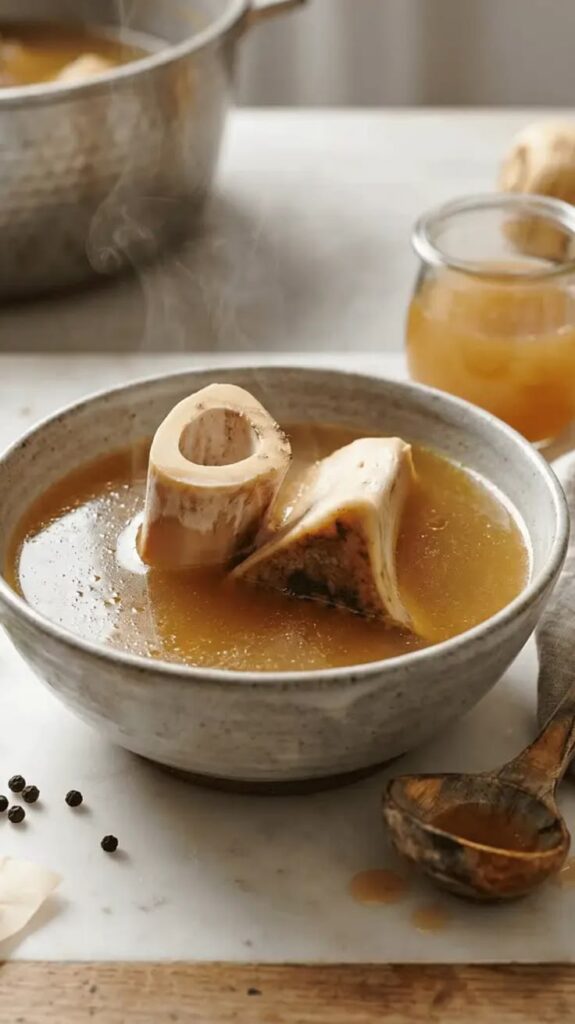
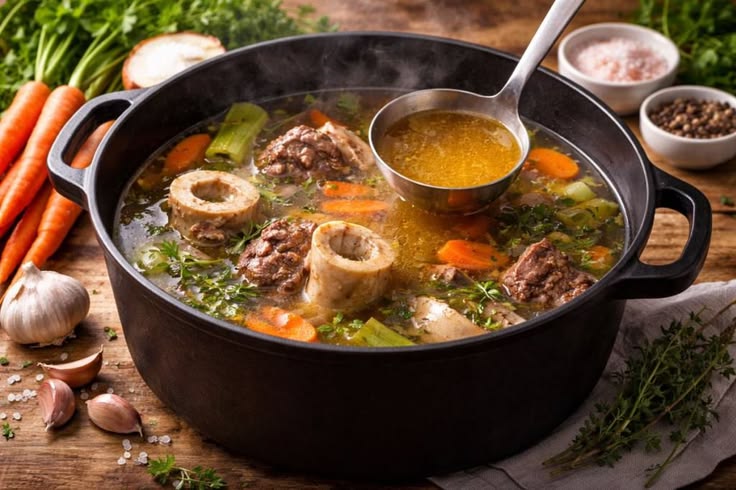
Bone broth is made by simmering animal bones, often with connective tissue, a little meat, and vegetables, in water for many hours. Bones used include beef, chicken, pork, turkey, lamb, and fish.
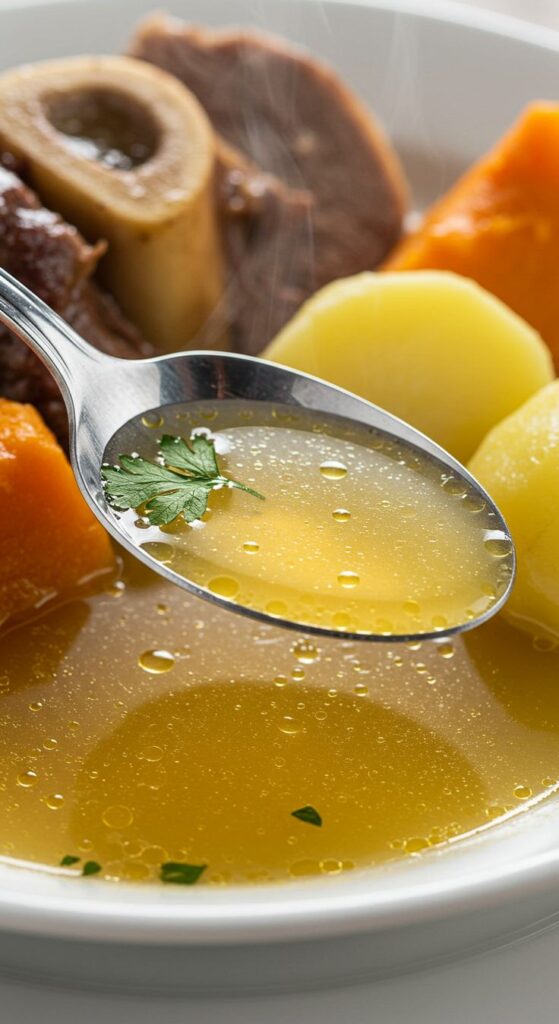
How it differs from regular stock: stock is usually simmered for a shorter time (a few hours), while bone broth is cooked much longer, typically 12 to 24 hours for beef and 6 to 12 hours for chicken, so more collagen is drawn out of bones, cartilage, tendons, and skin. A well-made broth gels when cooled, which is the visible sign of dissolved gelatin.
What Is Inside Bone Broth?
The composition varies a lot depending on the bones, the cooking time, the water-to-bone ratio, and the recipe. Typical components include:
- Collagen and gelatin: collagen is the main structural protein of bones, cartilage, and skin. Cooking breaks it down into gelatin.
- Amino acids: especially glycine, proline, and hydroxyproline, which are abundant in collagen, plus smaller amounts of glutamine and alanine.
- Minerals: small amounts of calcium, magnesium, phosphorus, potassium, and sodium.
- Other compounds: glycosaminoglycans (such as chondroitin and glucosamine, from cartilage) and, in some broths, hyaluronic acid.
Protein content ranges widely, from roughly 1 to 2 grams per cup in a thin homemade broth to about 8 to 10 grams per cup in some commercial products, which often add concentrated collagen or flavorings. Reading the label matters.
One important point on minerals: despite popular belief, bone broth is not a rich source of calcium. Analyses show the amounts are small compared with dairy or fortified foods. Adding vinegar does not change this significantly.
Another important point: collagen is an incomplete protein. It contains almost no tryptophan and is low in several other essential amino acids, so broth should not be your main protein source.
The Claimed Benefits: What Does the Evidence Say?
1. Gut Health and “Leaky Gut”
Claim: Bone broth heals the intestinal lining.
Evidence: Weak. Glutamine and glycine do play roles in intestinal cell function, and gelatin has been studied in animal models, but no good human trials show that bone broth repairs the gut or treats “leaky gut.” The concept of “leaky gut syndrome” as a stand-alone diagnosis is itself not established in medicine, although increased intestinal permeability is a genuine feature of some diseases. Broth can be a gentle, easily tolerated food during digestive illness, but this is not the same as treating a disease.
2. Joint Health
Claim: The collagen in broth rebuilds cartilage.
Evidence: Limited and indirect. Some randomized trials of collagen peptide supplements (usually 5 to 15 g daily for several months) show modest improvements in joint pain in osteoarthritis and in athletes. However, these used standardized supplements, not homemade broth, and the amount of collagen in broth is much lower and variable. The effect, even in supplement studies, is modest.
3. Skin, Hair, and Nails
Claim: Broth gives you youthful skin.
Evidence: Some trials of hydrolyzed collagen supplements report small improvements in skin elasticity and hydration after 8 to 12 weeks. Again, these were supplements, many were funded by manufacturers, and there are no solid studies on bone broth itself. Eating collagen does not mean it goes straight to your skin: the body digests it into amino acids and small peptides and then uses them as it needs.
4. Sleep and Relaxation
Claim: Glycine in broth improves sleep.
Evidence: Small studies show that about 3 grams of glycine before bed can improve subjective sleep quality. A cup of broth contains far less glycine than this, so any effect from broth alone is likely small. Still, a warm, savory drink in the evening is a comforting ritual.
5. Hydration, Comfort, and Illness
Claim: Broth helps when you are sick.
Evidence: Reasonable. Warm broth provides fluid, sodium, and some protein in an easy-to-eat form when appetite is low. A well-known laboratory study on chicken soup suggested mild anti-inflammatory effects, but evidence that it shortens colds is limited. Its main value is hydration, nutrition, and comfort.
6. Muscle, Satiety, and Weight Management
Claim: Broth builds muscle or helps fat loss.
Evidence: Broth has few calories (often 10 to 50 per cup) and can help you feel full, which may support a calorie-controlled diet. However, because its protein is incomplete and usually low in quantity, it is not an effective muscle-building food compared with meat, eggs, dairy, or legumes.
7. “Detox”
Claim: Broth removes toxins.
Evidence: None. Your liver and kidneys handle detoxification, and no food has been shown to speed it up.
Absorption: Is Collagen Really Used by the Body?
When you eat collagen or gelatin, digestive enzymes break it down into amino acids and small peptides. Some collagen-derived peptides, especially those containing hydroxyproline, can be detected in the bloodstream after hydrolyzed collagen is consumed, and researchers think they may act as signals to cells such as fibroblasts. This is an interesting line of research, but it remains unclear how much it matters for health, and nearly all of it comes from supplements rather than broth.
Possible Risks and Who Should Be Careful
Bone broth is safe for most people, but there are some real concerns:
- Lead and heavy metals: a 2013 study found that broth made from organic chicken bones had measurable levels of lead, because bones can accumulate metals. The amounts were lower than regulatory limits for drinking water in most cases, but the finding showed that levels vary, and it is a reasonable reason not to rely on broth as a daily staple in large amounts, especially for pregnant women and children.
- Sodium: commercial broths can be high in sodium. People with high blood pressure, heart failure, or kidney disease should check labels.
- Histamine intolerance: long-simmered broths accumulate histamine, which may trigger headaches, flushing, or digestive upset in sensitive people.
- Glutamate sensitivity: slow cooking releases free glutamate, which a few people report as problematic. Evidence for true “MSG sensitivity” is weak, but individual responses vary.
- Gout and high uric acid: broth contains purines, which can matter for people prone to gout, although the amounts are generally modest.
- Kidney disease: because of protein, minerals, and sodium, people with advanced kidney disease should ask their doctor.
- Allergies: fish or shellfish broths can trigger allergic reactions, and some commercial broths contain allergens such as soy, celery, or wheat.
- Food safety: long cooking does not remove the risk of bacterial growth afterward. See the storage tips below.
How to Make Bone Broth at Home
Ingredients (general idea):
- 1 to 2 kg of bones. A mix of marrow bones, joints, knuckles, feet, or necks gives the most gelatin.
- Cold water to cover
- A splash of apple cider vinegar or lemon juice (optional, may help extract minerals slightly)
- Vegetables and aromatics: onion, carrot, celery, garlic, bay leaf, peppercorns
- Salt, added at the end if you wish
Method:
- Optional: roast the bones at about 200°C (400°F) for 30 to 45 minutes for deeper flavor.
- Place the bones in a large pot with cold water and vinegar. Let them sit 30 minutes.
- Bring to a gentle boil, then reduce to a low simmer and skim off the foam.
- Add vegetables during the last 1 to 2 hours, so they don’t turn bitter.
- Simmer: chicken 6 to 12 hours, beef 12 to 24 hours. A pressure cooker can do this in about 2 to 3 hours.
- Strain, cool quickly, and refrigerate. Remove the fat layer from the top if you want.
Tip: if the broth does not gel in the fridge, it still tastes good and is nutritious, but it likely had too much water or too few collagen-rich parts.
Homemade vs. Store-Bought
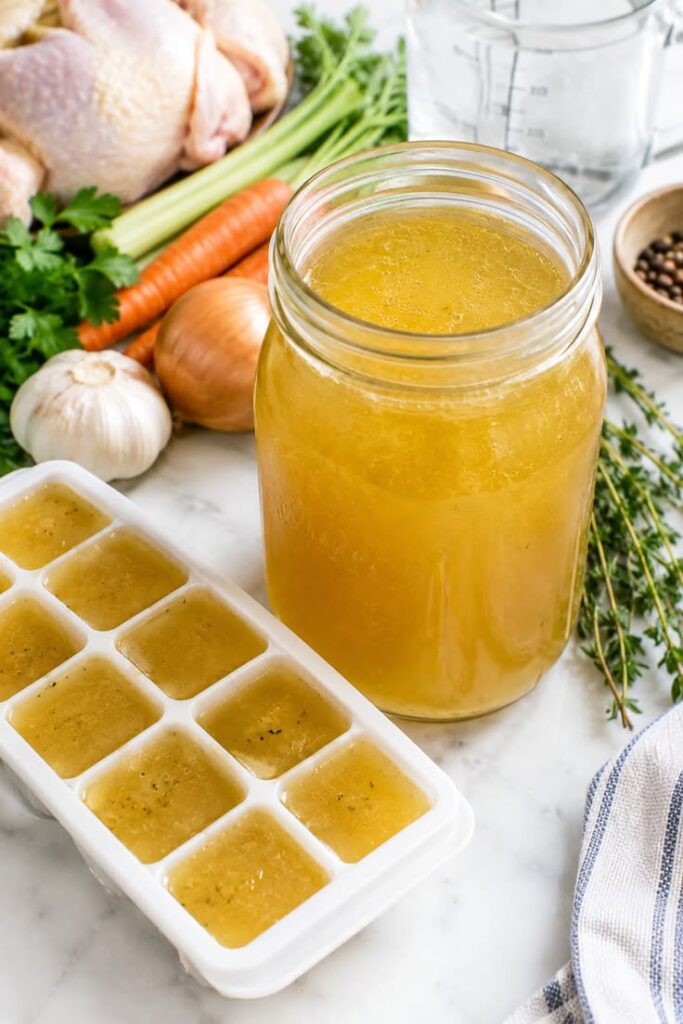
- Homemade: you control ingredients and salt, and it is often more affordable, but nutrient content varies from batch to batch.
- Store-bought: convenient, but quality varies widely. Look for short ingredient lists, low sodium, no added MSG or artificial flavors if you want to avoid them, and a clear protein value per serving. Some products labeled “bone broth” are really just seasoned stock.
- Collagen powders are a different product with higher, standardized amounts of collagen peptides, and they are the form usually used in clinical studies.
How to Include It in Your Diet
- Drink a cup warm, seasoned with salt, herbs, or ginger
- Use it as a base for soups, stews, and risottos
- Cook rice, grains, or legumes in it for extra flavor
- Use it in sauces and gravies
Around 1 cup per day is a reasonable amount for most healthy people, treated as a food, not as a treatment.
Key Takeaways
- Bone broth is made by long simmering of bones and connective tissue and contains gelatin, collagen-derived amino acids, and small amounts of minerals.
- It is a nourishing, comforting, low-calorie food, but many popular claims, especially about healing the gut, rebuilding joints, and erasing wrinkles, are not supported by strong human evidence.
- The best evidence for collagen benefits comes from supplements, not from broth.
- It is not a complete protein and not a rich source of calcium.
- Most people can enjoy it safely, but those with histamine intolerance, kidney disease, gout, high blood pressure, or pregnancy should be more careful.
- Enjoy it for what it is: a tasty, hydrating, traditional food, and one part of a varied, balanced diet.
This article is for educational purposes and does not replace personalized medical advice.
No comment