

Vitamins: Small Nutrients, Essential Roles
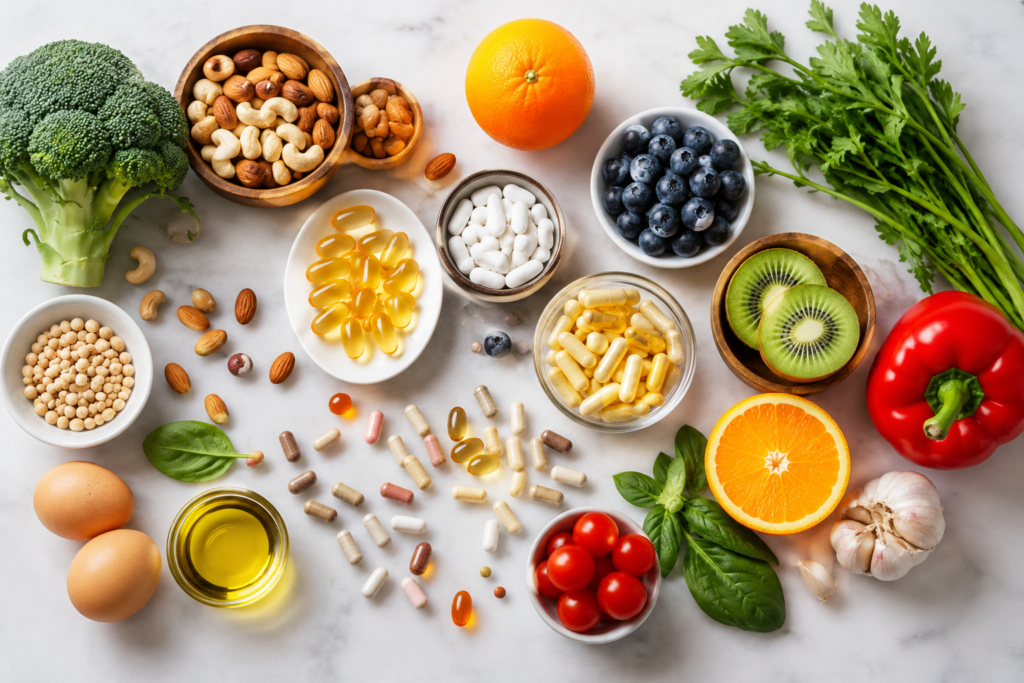
Vitamins are essential micronutrients that play a vital role in maintaining overall health and supporting the proper function of the body. Although they are needed in relatively small amounts, each vitamin contributes to important processes such as energy metabolism, immune function, cell growth, and tissue repair.
In this article, we explore the essential vitamins, their key functions, dietary sources, and the potential signs of deficiency, helping you better understand the role of vitamins in supporting a healthy and balanced lifestyle.
Vitamin C
Vitamin C: The Complete Guide
What Is Vitamin C and Why Does the Body Need It?
Vitamin C, also known as ascorbic acid, is a water-soluble vitamin that the human body cannot produce on its own. This means it must come entirely from diet or supplementation.
Vitamin C plays several essential biological roles:
- Collagen synthesis: A required cofactor for enzymes that build collagen, the structural protein found in skin, blood vessels, tendons, ligaments, and bone.
- Antioxidant protection: Neutralizes free radicals, helping protect cells from oxidative stress.
- Immune function: Supports white blood cell production and skin's barrier function against pathogens.
- Iron absorption: Converts dietary non-heme iron (from plant foods) into a form the body absorbs more easily.
- Neurotransmitter and carnitine synthesis: Involved in producing norepinephrine and carnitine.
- Wound healing: Adequate vitamin C is important for tissue repair after injury or surgery.
Signs and Symptoms of Deficiency
Mild vitamin C insufficiency is more common than people expect, especially among smokers, people with restrictive diets, and those with limited access to fresh produce. Early signs include:
- Fatigue and general weakness
- Easy bruising
- Dry, rough, or "corkscrew" hair
- Bleeding or swollen gums
- Slow wound healing
- Joint pain
Severe, prolonged deficiency leads to scurvy, which today is rare but still occurs in cases of severe malnutrition, alcoholism, or very restrictive eating patterns.
Best Food Sources
Vitamin C is destroyed by heat, light, and prolonged storage, so fresh, minimally cooked produce delivers the most.
| Food (100 g) | Approximate Vitamin C |
|---|---|
| Red bell pepper | 128 mg |
| Kiwi fruit | 93 mg |
| Orange | 53 mg |
| Strawberries | 59 mg |
| Broccoli (cooked) | 65 mg |
| Brussels sprouts (cooked) | 62 mg |
| Papaya | 62 mg |
| Kale (raw) | 93 mg |
| Guava | 228 mg |
| Lemon juice | 39 mg |
A general rule: one medium orange or half a red bell pepper already covers most of an adult's daily requirement.
Recommended Daily Intake (RDA)
Based on guidelines from the U.S. National Institutes of Health (NIH) Office of Dietary Supplements:
| Group | RDA |
|---|---|
| Adult men (19+) | 90 mg/day |
| Adult women (19+) | 75 mg/day |
| Pregnant women | 85 mg/day |
| Breastfeeding women | 120 mg/day |
| Smokers | RDA + 35 mg/day |
| Children (1-3 years) | 15 mg/day |
| Children (4-8 years) | 25 mg/day |
| Children (9-13 years) | 45 mg/day |
| Teens 14-18 (male) | 75 mg/day |
| Teens 14-18 (female) | 65 mg/day |
The Tolerable Upper Intake Level (UL) for adults is set at 2,000 mg/day, the threshold at which side effects become more likely with regular use.
Can You Take Too Much?
Vitamin C has relatively low toxicity because it is water-soluble and excess amounts are excreted in urine. However, doses above the upper limit can cause:
- Digestive upset (diarrhea, nausea, abdominal cramps)
- Increased risk of kidney stones in susceptible individuals (particularly with doses above 1,000 mg/day sustained over time)
- Potential interference with certain lab tests, such as blood glucose monitoring
There is no evidence that "megadosing" vitamin C prevents or cures the common cold in the general population, though some studies suggest it may modestly shorten cold duration in people under high physical stress.
Absorption Notes and Interactions
- Absorption is efficient at typical dietary doses (up to about 200 mg per dose), but efficiency decreases at very high single doses, so splitting supplement doses is more effective than one large dose.
- Significantly enhances absorption of non-heme iron when consumed in the same meal, useful for vegetarians and vegans.
- High-dose vitamin C supplements can interact with certain chemotherapy drugs and should be discussed with a physician.
- Smoking, chronic stress, and infections increase the body's vitamin C turnover and requirement.
- Boiling vegetables leaches vitamin C into water, while steaming or quick sautéing preserves more of it.
Practical Takeaway
For most healthy adults, meeting the RDA through diet alone is realistic and preferable to supplementation, since whole foods also provide fiber, flavonoids, and other nutrients that work synergistically with vitamin C. Supplementation becomes more relevant for smokers, people with limited produce access, certain malabsorption conditions, or during recovery from illness or surgery.
This content is for educational purposes and is not a substitute for personalized medical advice.
Vitamin E
Vitamin E: The Complete Guide
What Is Vitamin E and Why Does the Body Need It?
Vitamin E is a fat-soluble vitamin and a group name for eight naturally occurring compounds: four tocopherols and four tocotrienols. Of these, alpha-tocopherol is the only form actively maintained in human blood and is the one used to define dietary requirements.
Because it is fat-soluble, vitamin E requires dietary fat for absorption and is stored in the body's fatty tissue and liver, unlike water-soluble vitamins such as C.
Its main biological roles include:
- Antioxidant protection: Vitamin E is one of the body's primary fat-soluble antioxidants, protecting cell membranes from oxidative damage caused by free radicals, particularly protecting polyunsaturated fats within cell walls.
- Immune function: Supports the activity of immune cells, and deficiency is linked to reduced immune response.
- Cell signaling: Involved in regulating gene expression and cell communication processes.
- Blood vessel health: Helps keep blood vessels dilated and prevents unwanted blood clotting by inhibiting platelet aggregation.
Signs and Symptoms of Deficiency
True dietary vitamin E deficiency is rare in healthy people because the vitamin is stored in fat tissue and requirements are relatively easy to meet. When deficiency does occur, it is almost always linked to an underlying condition that impairs fat absorption, rather than diet alone. Symptoms include:
- Peripheral neuropathy (nerve damage causing numbness or tingling, especially in hands and feet)
- Muscle weakness
- Loss of coordination and balance (ataxia)
- Vision problems related to retinal damage
- Weakened immune response
People at higher risk include those with fat-malabsorption disorders such as Crohn's disease, cystic fibrosis, celiac disease, and chronic pancreatitis, as well as premature infants with very low birth weight.
Best Food Sources
Vitamin E is found mainly in plant oils, nuts, and seeds. Because it is fat-soluble, eating it alongside some dietary fat improves absorption.
| Food (100 g or as noted) | Approximate Vitamin E |
|---|---|
| Wheat germ oil (1 tbsp) | 20 mg |
| Sunflower seeds | 35 mg |
| Almonds | 26 mg |
| Sunflower oil (1 tbsp) | 6 mg |
| Hazelnuts | 15 mg |
| Peanut butter | 5 mg |
| Avocado (whole) | 4 mg |
| Spinach (cooked) | 2 mg |
| Olive oil (1 tbsp) | 2 mg |
Recommended Daily Intake (RDA)
Based on guidelines from the U.S. National Institutes of Health (NIH) Office of Dietary Supplements, values are expressed as mg of alpha-tocopherol:
| Group | RDA |
|---|---|
| Adults (19+, both sexes) | 15 mg/day |
| Pregnant women | 15 mg/day |
| Breastfeeding women | 19 mg/day |
| Children (1-3 years) | 6 mg/day |
| Children (4-8 years) | 7 mg/day |
| Children (9-13 years) | 11 mg/day |
| Teens (14-18 years) | 15 mg/day |
The Tolerable Upper Intake Level (UL) for adults is 1,000 mg/day from supplemental sources (this high threshold applies only to supplement forms, not food).
Can You Take Too Much?
Vitamin E toxicity from food alone is essentially unheard of. The concern arises almost exclusively with high-dose supplements, where excess amounts can:
- Interfere with vitamin K's role in blood clotting, increasing bleeding risk
- Increase the risk of hemorrhagic stroke, particularly at doses well above the RDA
- Interact with blood-thinning medications such as warfarin, aspirin, and other anticoagulants
A large clinical trial (SELECT) also raised concerns that high-dose vitamin E supplementation (400 IU/day) may be associated with a modestly increased risk of prostate cancer in some men, a finding that has made routine high-dose supplementation controversial outside of diagnosed deficiency.
Absorption Notes and Interactions
- Being fat-soluble, vitamin E absorption depends on adequate dietary fat intake and normal bile and pancreatic function; low-fat diets or fat-malabsorption conditions reduce absorption significantly.
- High doses of vitamin E can reduce the absorption or effectiveness of vitamin K, relevant for people on blood thinners.
- Vitamin C may help regenerate active vitamin E after it neutralizes a free radical, meaning the two work synergistically as antioxidants.
- Unlike water-soluble vitamins, unused vitamin E is stored rather than excreted, which is why upper limits matter more for this vitamin.
Practical Takeaway
For most healthy adults, a varied diet that includes nuts, seeds, and plant oils easily meets vitamin E requirements, and food-based intake carries essentially no risk of toxicity. High-dose supplementation is not recommended for the general population without a diagnosed deficiency or a doctor's guidance, particularly for anyone taking blood-thinning medication.
This content is for educational purposes and is not a substitute for personalized medical advice.
Vitamin D
Vitamin D: The Complete Guide
What Is Vitamin D and Why Does the Body Need It?
Vitamin D is a fat-soluble vitamin that functions more like a hormone than a typical vitamin. Unlike most vitamins, the body can produce it itself when skin is exposed to ultraviolet B (UVB) sunlight, converting a cholesterol-derived compound into vitamin D3. It is also obtained from a small number of foods and supplements as D2 or D3, both of which are converted by the liver and kidneys into calcitriol, the active hormone form.
Its main biological roles include:
- Calcium and phosphorus regulation: Vitamin D's primary role is enabling the intestines to absorb calcium and phosphorus from food, both essential for building and maintaining strong bones.
- Bone mineralization: Without adequate vitamin D, bones can become thin, brittle, or misshapen.
- Immune modulation: Involved in regulating both innate and adaptive immune responses.
- Muscle function: Supports normal muscle contraction and strength; deficiency is linked to muscle weakness and increased fall risk in older adults.
- Cell growth regulation: Plays a role in cell division and communication throughout the body.
Signs and Symptoms of Deficiency
Vitamin D deficiency is one of the most common nutrient deficiencies worldwide, particularly at higher latitudes, in people with limited sun exposure, darker skin tone (which reduces UVB-driven synthesis), older adults, and people who are obese (vitamin D is sequestered in fat tissue, lowering its circulating availability). Symptoms include:
- Fatigue and general tiredness
- Bone pain and muscle weakness or aches
- Increased susceptibility to infections
- Mood changes, including low mood in some individuals
- Slow wound healing
- Hair loss in more severe cases
Severe, prolonged deficiency in children causes rickets (soft, weak, deformed bones), and in adults causes osteomalacia (bone softening) as well as accelerating osteoporosis.
Best Food Sources
Very few foods naturally contain significant vitamin D, which is why sunlight exposure and fortified foods play such a large role in meeting requirements.
| Food (per serving) | Approximate Vitamin D |
|---|---|
| Cod liver oil (1 tbsp) | 1,360 IU |
| Salmon, cooked (100 g) | 526-570 IU |
| Fortified milk (1 cup) | 115-130 IU |
| Egg yolk (1 large) | 40 IU |
| Fortified cereal (1 serving) | 80 IU |
| Mushrooms exposed to UV light (100 g) | 130-450 IU |
| Canned tuna (100 g) | 230 IU |
Sun exposure remains the largest natural source for most people, though production varies enormously by season, latitude, time of day, skin tone, sunscreen use, and age.
Recommended Daily Intake (RDA)
Based on guidelines from the U.S. National Institutes of Health (NIH) Office of Dietary Supplements:
| Group | RDA |
|---|---|
| Infants (0-12 months) | 400 IU (10 mcg) |
| Children and adults (1-70 years) | 600 IU (15 mcg) |
| Adults over 70 | 800 IU (20 mcg) |
| Pregnant/breastfeeding women | 600 IU (15 mcg) |
The Tolerable Upper Intake Level (UL) for adults is 4,000 IU (100 mcg)/day. Many clinicians recommend testing blood levels (25-hydroxyvitamin D) before supplementing at higher therapeutic doses, since optimal blood levels vary by individual.
Can You Take Too Much?
Unlike vitamin C, vitamin D toxicity is a genuine risk, though it occurs almost exclusively from high-dose supplements over extended periods, never from sun exposure or food. Symptoms of toxicity relate to resulting high blood calcium (hypercalcemia) and include:
- Nausea, vomiting, and poor appetite
- Excessive thirst and frequent urination
- Weakness and confusion
- Kidney stones or, in severe cases, kidney damage
- Bone pain, due to calcium being pulled from bone tissue
Toxicity typically requires sustained intake well above 10,000 IU/day over months, so it is not a concern at standard supplemental doses, but is a real risk with unsupervised high-dose regimens.
Absorption Notes and Interactions
- Being fat-soluble, vitamin D is best absorbed when taken with a meal containing some fat.
- Vitamin D3 (cholecalciferol) generally raises and maintains blood levels more effectively than D2 (ergocalciferol).
- Magnesium is a required cofactor for converting vitamin D into its active form, so magnesium deficiency can blunt vitamin D's effectiveness even with adequate intake.
- Certain medications, including some anticonvulsants, glucocorticoids, and weight-loss drugs that block fat absorption, can reduce vitamin D levels or effectiveness.
- Obesity is associated with lower circulating vitamin D levels because the vitamin is sequestered in body fat, often requiring higher supplemental doses to reach the same blood level as a leaner individual.
Practical Takeaway
Vitamin D deficiency is common and often goes unnoticed because symptoms are vague, so testing blood levels is the most reliable way to know where you stand, especially for people with limited sun exposure, darker skin, older age, or obesity. Moderate sun exposure and food sources help, but supplementation is often necessary to reach sufficient levels, particularly outside of summer months or at higher latitudes.
This content is for educational purposes and is not a substitute for personalized medical advice.
Vitamin A
Vitamin A: The Complete Guide
What Is Vitamin A and Why Does the Body Need It?
Vitamin A is a fat-soluble vitamin that exists in two distinct dietary forms. Preformed vitamin A (retinol and retinyl esters) comes from animal sources and is used directly by the body. Provitamin A carotenoids (such as beta-carotene) come from plant sources and must be converted into active vitamin A by the body, a process that is often inefficient and variable between individuals.
Its main biological roles include:
- Vision: Vitamin A is a core component of rhodopsin, the light-sensitive pigment in the retina needed for vision, especially in low light. This is its best-documented and most specific function.
- Immune function: Supports the normal development and function of immune cells, and maintains the integrity of skin and mucosal barriers (in the gut, lungs, and eyes) that block pathogen entry.
- Cell growth and differentiation: Regulates gene expression involved in how cells grow, specialize, and mature, which is critical during fetal development.
- Reproduction: Necessary for normal reproductive function in both men and women.
Signs and Symptoms of Deficiency
Vitamin A deficiency is rare in high-income countries but remains a significant public health issue in parts of the developing world, where it is a leading cause of preventable childhood blindness. Symptoms include:
- Night blindness (difficulty seeing in low light), often the earliest sign
- Dry eyes (xerophthalmia) and, if untreated, corneal damage that can lead to permanent blindness
- Dry, rough skin
- Increased frequency and severity of infections, particularly respiratory and diarrheal illness
- Poor wound healing
- Impaired growth in children
People at higher risk include those with fat-malabsorption disorders (Crohn's disease, celiac disease, cystic fibrosis, chronic liver disease), and populations with diets low in animal products and colorful fruits and vegetables.
Best Food Sources
Preformed vitamin A comes from animal foods, while provitamin A carotenoids come from orange, yellow, and dark leafy plant foods.
| Food (100 g unless noted) | Approximate Vitamin A (RAE) |
|---|---|
| Beef liver, cooked | 6,600 mcg |
| Sweet potato, baked (1 medium) | 1,400 mcg |
| Carrots, raw | 835 mcg |
| Spinach, cooked | 573 mcg |
| Pumpkin, cooked | 369 mcg |
| Egg (1 large) | 75 mcg |
| Mango (1 whole) | 112 mcg |
| Whole milk (1 cup) | 112 mcg |
Vitamin A content is measured in Retinol Activity Equivalents (RAE) because plant carotenoids are converted to active vitamin A at a much lower efficiency than preformed animal sources; roughly 12 mcg of beta-carotene from food equals 1 mcg RAE.
Recommended Daily Intake (RDA)
Based on guidelines from the U.S. National Institutes of Health (NIH) Office of Dietary Supplements, values are in mcg RAE:
| Group | RDA |
|---|---|
| Adult men (19+) | 900 mcg RAE |
| Adult women (19+) | 700 mcg RAE |
| Pregnant women | 770 mcg RAE |
| Breastfeeding women | 1,300 mcg RAE |
| Children (1-3 years) | 300 mcg RAE |
| Children (4-8 years) | 400 mcg RAE |
| Children (9-13 years) | 600 mcg RAE |
| Teens 14-18 (male) | 900 mcg RAE |
| Teens 14-18 (female) | 700 mcg RAE |
The Tolerable Upper Intake Level (UL) for adults is 3,000 mcg RAE/day of preformed vitamin A. Notably, this limit applies only to preformed vitamin A (retinol) from animal sources or supplements; there is no established upper limit for provitamin A carotenoids from plant foods, since the body regulates their conversion.
Can You Take Too Much?
Vitamin A toxicity (hypervitaminosis A) is a genuine concern because, unlike vitamin C, excess preformed vitamin A accumulates in the liver rather than being excreted. Toxicity can be acute (a single very large dose) or chronic (regular intake above the UL over time). Symptoms include:
- Nausea, vomiting, dizziness, and headache
- Blurred vision
- Liver damage, in chronic cases
- Bone pain and reduced bone density with long-term excess
- Skin changes, hair loss, and cracked lips
Vitamin A is teratogenic in excess, meaning high-dose preformed vitamin A during pregnancy is linked to serious birth defects. Pregnant women are specifically advised to avoid high-dose vitamin A supplements and retinol-heavy products, and to discuss any supplement use with their doctor.
Beta-carotene from food does not cause this type of toxicity, since conversion to active vitamin A slows down once the body has enough; very high beta-carotene intake mainly causes a harmless yellow-orange skin discoloration (carotenemia).
Absorption Notes and Interactions
- Being fat-soluble, both preformed vitamin A and carotenoids absorb better when eaten with some dietary fat.
- Zinc deficiency impairs the body's ability to transport and use vitamin A, so adequate zinc intake supports vitamin A function.
- Chronic alcohol use can deplete liver vitamin A stores and increase susceptibility to toxicity from supplements.
- High-dose vitamin A supplements should not be combined with retinoid medications (such as isotretinoin for acne), as this can compound toxicity risk.
- Cooking and mechanically processing plant foods (such as pureeing carrots) can improve carotenoid absorption compared to eating them whole and raw.
Practical Takeaway
For most people, a diet including colorful vegetables, and moderate amounts of animal products or fortified foods, comfortably meets vitamin A needs without any toxicity risk. Because excess preformed vitamin A accumulates in the body and carries real risks, especially in pregnancy, high-dose supplements should only be used under medical supervision rather than routinely.
This content is for educational purposes and is not a substitute for personalized medical advice.
Vitamin K
Vitamin K: The Complete Guide
What Is Vitamin K and Why Does the Body Need It?
Vitamin K is a fat-soluble vitamin that exists in two main natural forms. Vitamin K1 (phylloquinone) comes from green plant foods and makes up most dietary intake. Vitamin K2 (menaquinones) is produced by gut bacteria and found in some fermented and animal foods, and appears to have a longer half-life in the body.
Its main biological roles include:
- Blood clotting: Vitamin K is essential for activating clotting factors in the liver. Without it, blood cannot clot properly, which is why it was originally named for the German word "Koagulation."
- Bone metabolism: Activates osteocalcin, a protein involved in binding calcium to the bone matrix, supporting bone strength.
- Vascular health: Activates matrix Gla-protein, which helps prevent calcium from depositing in blood vessel walls and soft tissue.
Signs and Symptoms of Deficiency
Vitamin K deficiency is uncommon in healthy adults because the vitamin is widely available in leafy greens and the body also gets some supply from gut bacteria. When deficiency occurs, it is usually linked to an underlying cause rather than diet alone. Symptoms include:
- Easy bruising
- Excessive bleeding from cuts, gums, or the nose
- Blood in urine or stool
- Heavy menstrual bleeding
- In infants, a specific and serious risk called Vitamin K Deficiency Bleeding (VKDB), which is why newborns routinely receive a vitamin K injection at birth
People at higher risk of deficiency include those with fat-malabsorption disorders (celiac disease, Crohn's disease, cystic fibrosis), chronic liver disease, and people taking long-term antibiotics, which can reduce the gut bacteria that produce K2. People on blood-thinning medication that works by blocking vitamin K (such as warfarin) require careful, consistent vitamin K intake rather than avoidance.
Best Food Sources
Green leafy vegetables are by far the richest source of vitamin K1, while K2 comes mainly from fermented foods and some animal products.
| Food (100 g unless noted) | Approximate Vitamin K |
|---|---|
| Kale, cooked | 817 mcg |
| Spinach, cooked | 494 mcg |
| Broccoli, cooked | 141 mcg |
| Brussels sprouts, cooked | 150 mcg |
| Natto (fermented soybeans) | approx. 1,000+ mcg (mostly K2) |
| Soybean oil (1 tbsp) | 25 mcg |
| Egg yolk (1 large) | small amount (K2) |
| Hard cheeses | small to moderate amount (K2) |
A single cup of cooked kale or spinach easily covers an entire day's requirement.
Recommended Daily Intake (Adequate Intake)
Because there isn't enough data to set a full RDA, vitamin K guidelines from the NIH Office of Dietary Supplements are expressed as an Adequate Intake (AI) rather than an RDA:
| Group | Adequate Intake |
|---|---|
| Adult men (19+) | 120 mcg/day |
| Adult women (19+) | 90 mcg/day |
| Pregnant/breastfeeding women (18-50) | 75-90 mcg/day |
| Children (1-3 years) | 30 mcg/day |
| Children (4-8 years) | 55 mcg/day |
| Children (9-13 years) | 60 mcg/day |
| Teens (14-18 years) | 75 mcg/day |
No Tolerable Upper Intake Level (UL) has been established for vitamin K, as there is no well-documented toxicity from either K1 or K2, even at high intakes, in individuals not on blood-thinning medication.
Can You Take Too Much?
Vitamin K has one of the best safety profiles of any fat-soluble vitamin. Because no UL has been set and no clear toxicity syndrome has been identified from dietary or supplemental vitamin K in healthy people, excess intake from food or standard supplements is not considered a concern.
The real-world caution with vitamin K is not toxicity but its interaction with blood thinners: for people taking warfarin, sudden large increases or decreases in vitamin K intake (from diet or supplements) can throw off the medication's effect and blood clotting balance, so consistency matters more than avoidance.
Absorption Notes and Interactions
- Being fat-soluble, vitamin K absorbs better when eaten with some dietary fat, such as olive oil drizzled over leafy greens.
- Long-term or broad-spectrum antibiotic use can reduce the gut bacteria that produce vitamin K2, potentially lowering overall status.
- Fat-malabsorption conditions (celiac disease, Crohn's disease, cystic fibrosis, bile duct obstruction) reduce vitamin K absorption.
- Vitamin K works in balance with vitamin D and calcium for bone and vascular health, and some research suggests K2 in particular helps direct calcium toward bone rather than arteries.
- People on anticoagulant medication should keep their vitamin K intake consistent day to day rather than avoiding it, and should never start or stop a vitamin K supplement without medical guidance.
Practical Takeaway
For most healthy people, regularly eating leafy green vegetables easily covers vitamin K needs, and there is essentially no risk of getting too much from food. The one group that needs individualized guidance is anyone on blood-thinning medication, where consistency of intake matters more than the specific amount.
This content is for educational purposes and is not a substitute for personalized medical advice.
Vitamin B
B Vitamins: The Complete Guide
The B vitamins are a group of eight water-soluble vitamins that, unlike fat-soluble vitamins (A, D, E, K), are not stored in significant amounts in the body (with the exception of B12) and must be replenished regularly through diet. They work closely together, largely as coenzymes that help the body convert food into cellular energy, and each also has distinct, specific roles.
Vitamin B1 (Thiamine)
Function: Thiamine is a coenzyme essential for converting carbohydrates into energy and supports nerve cell function.
Deficiency signs: Fatigue, irritability, poor appetite, and in severe cases, beriberi (affecting the nervous and cardiovascular systems) or Wernicke-Korsakoff syndrome, a serious neurological condition strongly associated with chronic alcohol misuse.
Food sources: Whole grains, pork, legumes, sunflower seeds, fortified cereals.
RDA: 1.2 mg/day (adult men), 1.1 mg/day (adult women).
Upper limit / toxicity: No UL established; no known toxicity from oral intake, as excess is readily excreted.
Notes: People with alcohol use disorder are at particularly high risk of deficiency and are often given supplemental thiamine, since alcohol interferes with its absorption and storage.
Vitamin B2 (Riboflavin)
Function: Essential for energy production, cellular growth, and functions as an antioxidant; also required to activate vitamin B6 and folate.
Deficiency signs: Cracked lips and corners of the mouth, sore throat, swollen tongue, skin inflammation, and eye sensitivity to light.
Food sources: Eggs, organ meats, lean meats, dairy, green vegetables, fortified grains.
RDA: 1.3 mg/day (adult men), 1.1 mg/day (adult women).
Upper limit / toxicity: No UL established; excess is excreted in urine (can cause harmless bright yellow urine discoloration).
Notes: Riboflavin is sensitive to light, which is why milk is now typically sold in opaque rather than clear containers.
Vitamin B3 (Niacin)
Function: Required for energy metabolism, DNA repair, and functions as a precursor to NAD/NADP, molecules central to hundreds of metabolic reactions.
Deficiency signs: Severe deficiency causes pellagra, classically described by the "3 D's": dermatitis, diarrhea, and dementia; milder deficiency causes fatigue, mouth sores, and indigestion.
Food sources: Poultry, fish, red meat, peanuts, fortified grains; the body can also make a small amount from the amino acid tryptophan.
RDA: 16 mg NE/day (adult men), 14 mg NE/day (adult women).
Upper limit / toxicity: UL of 35 mg/day (from supplements/fortified food only, not naturally occurring niacin in food). High supplemental doses can cause "niacin flush" (skin redness, itching, tingling), and very high doses used for cholesterol management can cause liver damage.
Notes: High-dose niacin is sometimes used medically to improve cholesterol profiles, but this requires medical supervision due to liver toxicity risk.
Vitamin B5 (Pantothenic Acid)
Function: A component of coenzyme A, essential for synthesizing and breaking down fatty acids, and involved in energy production.
Deficiency signs: Extremely rare; when it occurs, symptoms include fatigue, irritability, numbness and tingling in the hands and feet, and digestive upset.
Food sources: Widely available in nearly all foods, especially organ meats, mushrooms, avocados, sunflower seeds, and whole grains (its name derives from the Greek word for "everywhere").
RDA: 5 mg/day (adults, Adequate Intake).
Upper limit / toxicity: No UL established; no documented toxicity, though very high doses may cause mild digestive upset.
Notes: Because it is present in almost every food group, deficiency is essentially never seen outside of severe general malnutrition.
Vitamin B6 (Pyridoxine)
Function: Involved in over 100 enzyme reactions, primarily related to amino acid metabolism, red blood cell formation, and neurotransmitter synthesis (including serotonin and dopamine).
Deficiency signs: Anemia, skin rashes, cracked lips, confusion, and in infants, seizures; often occurs alongside deficiencies in other B vitamins.
Food sources: Poultry, fish, potatoes, chickpeas, fortified cereals, bananas.
RDA: 1.3 mg/day (adults 19-50), rising to 1.7 mg/day (men) and 1.5 mg/day (women) after age 50.
Upper limit / toxicity: UL of 100 mg/day for adults. Long-term high-dose supplementation is one of the more well-documented vitamin toxicities, causing sensory nerve damage (peripheral neuropathy) that can be irreversible in severe cases.
Notes: Because B6 toxicity is a genuine and well-documented risk, high-dose supplements should not be taken long-term without medical guidance.
Vitamin B7 (Biotin)
Function: A coenzyme involved in metabolizing fats, carbohydrates, and proteins, and important for hair, skin, and nail health.
Deficiency signs: Rare; can cause hair thinning, a scaly red rash around the eyes, nose, and mouth, and brittle nails. Raw egg white consumed in very large amounts over time can cause deficiency because a protein in raw eggs (avidin) binds biotin and blocks its absorption (cooking eggs deactivates this effect).
Food sources: Egg yolks, organ meats, nuts, seeds, and some vegetables like sweet potatoes.
RDA: 30 mcg/day (adults, Adequate Intake).
Upper limit / toxicity: No UL established; no documented toxicity even at high doses.
Notes: High-dose biotin supplements (common in hair/skin/nail products) can interfere with certain lab tests, including thyroid and cardiac biomarker tests, potentially causing falsely abnormal results. It's important to tell a doctor about biotin supplement use before bloodwork.
Vitamin B9 (Folate)
Function: Essential for DNA synthesis and repair, cell division, and red blood cell formation. "Folate" refers to the natural form found in food; "folic acid" is the synthetic form used in supplements and fortified foods.
Deficiency signs: Megaloblastic anemia (large, immature red blood cells), fatigue, weakness, mouth sores, and poor growth. Deficiency during early pregnancy is strongly linked to neural tube defects in the developing fetus.
Food sources: Leafy greens, legumes, asparagus, fortified grains and cereals, citrus fruits.
RDA: 400 mcg DFE/day (adults); 600 mcg DFE/day for pregnant women, a notably higher requirement due to the neural tube defect risk in early pregnancy, which is why folic acid supplementation is specifically recommended before and during early pregnancy.
Upper limit / toxicity: UL of 1,000 mcg/day from synthetic folic acid (supplements/fortified food only; no limit on natural food folate). High folic acid intake can mask the blood-count signs of vitamin B12 deficiency while allowing B12-related nerve damage to progress undetected.
Notes: Because folic acid can mask B12 deficiency, older adults supplementing with folic acid should also ensure adequate B12 status, ideally confirmed with a doctor.
Vitamin B12 (Cobalamin)
Function: Required for red blood cell formation, DNA synthesis, and maintaining the myelin sheath that insulates nerve cells. It is the only B vitamin the body stores in meaningful amounts (mainly in the liver), so deficiency can take years to develop even with inadequate intake.
Deficiency signs: Fatigue, weakness, megaloblastic anemia, numbness and tingling in hands and feet, balance problems, memory difficulties, and in advanced cases, irreversible nerve damage. Absorption requires a stomach protein called intrinsic factor, so deficiency can occur even with adequate dietary intake if absorption is impaired.
Food sources: Exclusively animal products in meaningful amounts: meat, fish, eggs, dairy, and fortified plant-based products (nutritional yeast, fortified plant milks). This makes B12 the vitamin of greatest concern for people following vegan diets.
RDA: 2.4 mcg/day (adults); 2.6 mcg/day (pregnancy); 2.8 mcg/day (breastfeeding).
Upper limit / toxicity: No UL established; no documented toxicity even at high doses, since excess is efficiently excreted.
Notes: Vegans and vegetarians with limited animal product intake should supplement B12 or rely on fortified foods, since no reliable plant source exists. Absorption also declines with age and with long-term use of certain medications, including metformin and proton pump inhibitors (acid reflux medications), so older adults on these drugs may need monitoring.
Practical Takeaway
Because B vitamins work together in interconnected metabolic pathways, a varied diet that includes whole grains, legumes, lean proteins, and vegetables generally covers the full group for most healthy adults eating a mixed diet. The two exceptions worth individual attention are folate, given the specific requirement increase in pregnancy, and B12, given its absence from plant foods and its tendency to become harder to absorb with age.
This content is for educational purposes and is not a substitute for personalized medical advice.
No comment