

Hydration:
A Comprehensive, Evidence-Based Guide to Water, Fluid Balance, Electrolytes, Dehydration, and Human Health
Introduction
Hydration is often reduced to a simple wellness rule: “Drink eight glasses of water a day.” Human fluid physiology is considerably more sophisticated.
Water is the largest single component of the human body and is essential for cellular reactions, circulation, temperature regulation, kidney function, nutrient transport, and maintenance of electrolyte and acid-base balance. Yet both underhydration and excessive water intake can cause problems.
The scientifically correct question is therefore not simply “How much water should I drink?” but rather:
How much fluid does my body need under my particular conditions, and how effectively can I maintain fluid and electrolyte balance?
Hydration requirements vary with body size, age, diet, physical activity, temperature, pregnancy, lactation, illness, medications, and kidney function. There is no single volume appropriate for every person.
What Is Hydration?
Hydration refers to the body’s water balance and the distribution of water throughout its different compartments.
Total body water is divided mainly into:
- Intracellular fluid: water inside cells
- Extracellular fluid: water outside cells, including blood plasma and interstitial fluid
Water constantly moves between these compartments to maintain homeostasis, the body’s ability to keep its internal environment within appropriate physiological limits.
Several concepts are important:
- Osmolality: concentration of dissolved particles per kilogram of water
- Osmolarity: concentration of dissolved particles per liter of solution
- Tonicity: the effect of a solution on water movement across cell membranes
- Plasma volume: the liquid component of circulating blood
- Fluid balance: the relationship between water entering and leaving the body
The body continuously adjusts this system through thirst, the kidneys, hormones such as arginine vasopressin (ADH), and changes in urine concentration.

Why Does the Body Need Water?
Water participates in virtually every major physiological system.
It helps:
- Maintain blood volume and circulation
- Regulate body temperature through sweating and heat dissipation
- Transport nutrients and hormones
- Remove metabolic waste through the kidneys
- Support cellular biochemical reactions
- Maintain electrolyte concentrations
- Lubricate joints and mucosal surfaces
- Support digestion
- Maintain muscle and nerve function
- Support normal brain function
- Maintain cardiovascular stability
Water also has important physical properties. Its high heat capacity allows the body to absorb and distribute heat generated by metabolism.
When body water falls sufficiently, cardiovascular and thermoregulatory systems must compensate. With progressive fluid loss, urine production decreases, heart rate may increase, blood pressure can fall, and physical and cognitive performance may deteriorate.
Where Does Our Water Come From?
Total water intake includes:
- Plain drinking water
- Other beverages
- Water contained in foods
- A small amount generated metabolically during nutrient oxidation
This distinction matters because hydration recommendations frequently refer to total water, not simply the amount of water someone drinks.
The National Academies’ reference values explicitly include water from beverages and food. In its adult reference framework, total water intake was estimated at approximately 3.7 L/day for men and 2.7 L/day for women, but these are Adequate Intakes, not universal prescriptions for every individual.
Water-rich foods such as fruits, vegetables, soups, yogurt, and milk can contribute substantially to daily intake.
How Does the Body Lose Water?

Water leaves the body through:
- Urine
- Sweat
- Respiration
- Feces
- Insensible losses through skin and breathing
Losses increase during:
- Exercise
- Hot or humid weather
- Fever
- Vomiting
- Diarrhea
- Heavy sweating
- High-altitude exposure
- Pregnancy and lactation
- Certain illnesses
- Use of medications affecting fluid balance
The kidneys are particularly important because they can dramatically alter urine concentration and volume according to the body’s needs.
How Much Water Do We Actually Need?
There is no scientifically established universal “eight glasses” requirement.
The appropriate amount varies according to physiological and environmental circumstances.
The National Academies emphasize that their Adequate Intake for total water should not be interpreted as an exact daily requirement. Healthy individuals can maintain normal hydration over a relatively wide range of intakes. Requirements increase with physical activity and environmental heat.
Approximate reference values for total water
| Population | Approximate total water reference |
|---|---|
| Adult women | ~2.7 L/day |
| Adult men | ~3.7 L/day |
| Pregnancy | ~3.0 L/day |
| Lactation | ~3.8 L/day |
These figures include water from food and beverages, not just glasses of water.
They should therefore not be converted into a rigid prescription such as “drink exactly 2.7 or 3.7 liters.”
What changes your needs?
Your requirements may increase with:
- Larger body size
- Exercise
- Hot environments
- Fever
- Diarrhea or vomiting
- Pregnancy
- Breastfeeding
Conversely, some medical conditions require fluid restriction, meaning that deliberately drinking more water can actually be harmful.
How the Kidneys Regulate Hydration
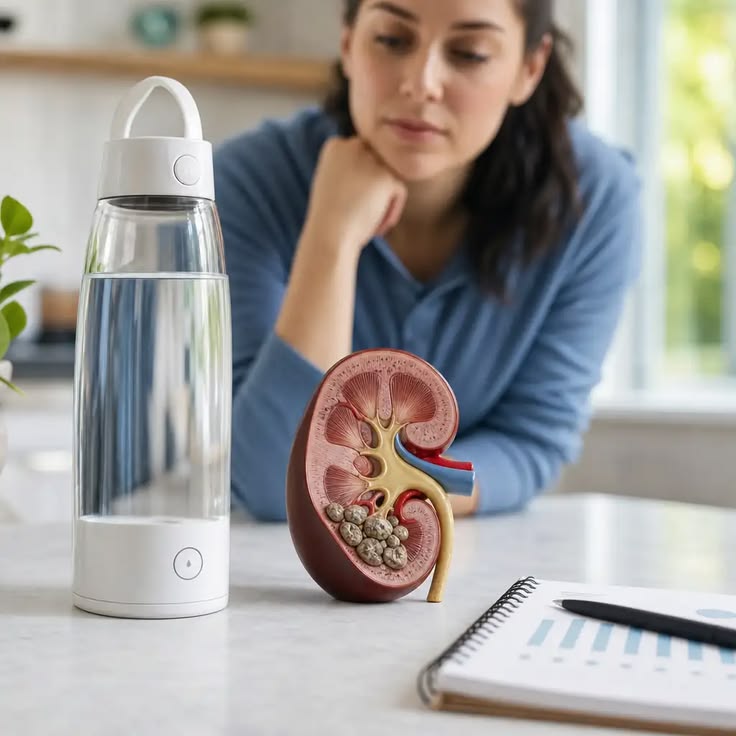
The kidneys are the body’s principal fluid-regulation organs.
When the body needs to conserve water, increased ADH/vasopressin signaling promotes water reabsorption in the kidneys. Specialized membrane proteins called aquaporins facilitate this movement.
When water intake is excessive, ADH secretion falls and the kidneys can produce more dilute urine.
Thirst provides another major regulatory mechanism.
The hypothalamus detects changes in plasma osmolality through specialized osmoreceptors. Changes in blood volume and pressure can also activate signals involving baroreceptors and hormonal systems such as the renin-angiotensin-aldosterone system.
This is why hydration is not simply a matter of putting water into the body. It is a dynamic regulatory system.

Is Thirst Reliable?
For most healthy adults living under ordinary conditions, drinking in response to thirst is an important and generally effective physiological mechanism for maintaining hydration.
However, thirst is not infallible.
Its effectiveness may be reduced or complicated by:
- Older age
- Cognitive impairment
- Certain illnesses
- Exercise
- Heat exposure
- Limited access to fluids
- Situations where drinking is intentionally restricted
Therefore, athletes exercising for prolonged periods in heat, older adults, and people experiencing substantial fluid losses may need a more deliberate hydration strategy.
Dehydration
Dehydration occurs when water loss exceeds water intake sufficiently to produce a deficit in body water.
Possible symptoms include:
- Thirst
- Dry mouth
- Reduced urination
- Darker urine
- Fatigue
- Headache
- Dizziness
- Reduced exercise performance
- Orthostatic symptoms
- Increased heart rate
- Cognitive changes
However, none of these symptoms is perfectly specific.
For example, fatigue and headache have many causes unrelated to dehydration.
Severe dehydration can progress to circulatory instability, altered mental status, and potentially life-threatening complications.
How Can Hydration Status Be Measured?
No single test provides a perfect answer in every situation.
| Measure | Main advantage | Important limitation |
|---|---|---|
| Thirst | Simple physiological signal | Less reliable in some populations |
| Urine color | Convenient | Affected by foods, medications and supplements |
| Urine specific gravity | Useful concentration marker | Influenced by urinary solutes |
| Urine osmolality | Physiologically informative | Usually requires laboratory testing |
| Plasma osmolality | Strong indicator of extracellular hydration | Not routinely measured at home |
| Serum sodium | Clinically important | Reflects water-sodium balance rather than hydration alone |
| Body weight | Useful for exercise-related fluid loss | Requires reliable baseline measurements |
| Clinical examination | Useful in significant illness | Findings may be nonspecific |
What about urine color?
Dark urine often indicates concentrated urine, but it is not a perfect hydration test.
Conversely, completely clear urine does not necessarily mean “perfect hydration.” It may simply reflect highly dilute urine following substantial fluid intake.
Electrolytes: Hydration Is More Than Water
The major electrolytes include:
- Sodium
- Potassium
- Chloride
- Magnesium
- Calcium
- Phosphate
They participate in:
- Nerve signaling
- Muscle contraction
- Cardiac electrical activity
- Fluid distribution
- Osmotic regulation
- Acid-base physiology
Sodium is particularly important for extracellular fluid.
During prolonged heavy sweating, substantial sodium can be lost alongside water. In certain circumstances, replacing only water may therefore be insufficient.
But this does not mean that healthy people need electrolyte supplements every day.
For most ordinary daily activities, a balanced diet and normal beverage intake provide adequate electrolytes.

Overhydration and Hyponatremia
More water is not automatically better.
Hyponatremia occurs when serum sodium concentration becomes abnormally low. In some cases, excessive water intake contributes by diluting sodium concentration.
This is particularly important in prolonged endurance exercise, where athletes may consume more fluid than they lose.
Symptoms can include:
- Headache
- Nausea
- Vomiting
- Confusion
- Altered mental status
- Seizures in severe cases
Severe exercise-associated hyponatremia is a medical emergency.
The practical lesson is simple:
Avoid both substantial dehydration and aggressive overhydration.

Hydration and Exercise
Exercise increases water loss primarily through sweating and respiration.
Hydration strategy should depend on:
- Exercise duration
- Intensity
- Ambient temperature
- Humidity
- Individual sweat rate
- Sweat sodium concentration
- Access to fluids
For short, moderate recreational exercise, plain water is generally sufficient.
Carbohydrate-electrolyte beverages can become more useful during prolonged or intense exercise, particularly in heat or when substantial sweat losses occur.
Sports drinks should therefore be viewed as tools for specific circumstances, not inherently healthier alternatives to water.
How to Calculate Sweat Rate
A practical method is:
Sweat loss ≈ Pre-exercise body weight − Post-exercise body weight + Fluid consumed − Urine produced
Then:
Sweat rate = Sweat loss ÷ Exercise duration
Example
Suppose an athlete:
- Starts at 70.0 kg
- Finishes at 69.2 kg
- Drinks 0.8 L
- Produces no urine
- Exercises for 1 hour
Estimated sweat loss:
0.8 kg + 0.8 L = approximately 1.6 L
Therefore:
Sweat rate ≈ 1.6 L/hour
This information can help create a more individualized exercise hydration strategy.

Heat and Hydration
Dehydration and heat illness are related but not identical.
Heat exhaustion involves impaired ability to cope with heat and may include weakness, dizziness, headache, nausea and heavy sweating.
Heat stroke is far more serious and involves central nervous system dysfunction in the setting of severe heat illness. It requires emergency treatment.
Prevention includes:
- Heat acclimatization
- Appropriate work-rest schedules
- Access to fluids
- Appropriate clothing
- Environmental monitoring
- Avoiding excessive exercise during dangerous heat
Importantly, overhydration does not protect against all heat illness, and both dehydration and overhydration can create problems.
Hydration and the Brain
Acute changes in hydration can influence aspects of:
- Attention
- Mood
- Perceived fatigue
- Cognitive performance
- Physical performance
However, claims that ordinary dehydration permanently “damages the brain” are much stronger than the available evidence supports.
It is important to distinguish short-term physiological effects of significant fluid loss from evidence about long-term neurological disease.
Similarly, drinking additional water beyond physiological needs has not been established as a universal cognitive enhancer.

Hydration and Headaches
Dehydration can be associated with headache, and correcting a fluid deficit may help when dehydration is genuinely contributing.
But headache is nonspecific.
Headaches can result from:
- Migraine
- Sleep deprivation
- Medication effects
- Infection
- Hormonal changes
- Stress
- Caffeine withdrawal
- Neurological disease
Therefore, “drink water” should not be treated as a universal headache treatment.
Persistent, severe, recurrent, or neurologically unusual headaches require appropriate medical assessment.
Hydration, Digestion and Constipation
Water contributes to normal gastrointestinal function and stool water content.
However, simply drinking enormous quantities of water is not a universal treatment for constipation.
Hydration is particularly relevant when inadequate fluid intake accompanies:
- High-fiber diets
- Increased stool water requirements
- Significant fluid losses
For chronic constipation, dietary fiber, physical activity, medications and underlying gastrointestinal conditions may be more important than simply increasing water intake.
Hydration and Kidney Stones
Adequate fluid intake is one of the most established lifestyle strategies for reducing the risk of recurrent kidney stones.
Higher fluid intake increases urine volume, which can reduce the concentration of stone-forming substances.
This does not mean that water literally “flushes toxins out of the kidneys.”
The kidneys already perform continuous filtration, reabsorption and secretion.
For people with recurrent nephrolithiasis, individualized medical advice is preferable because stone composition matters.
Cardiovascular and Metabolic Health
Acute dehydration can reduce plasma volume and increase cardiovascular strain.
In contrast, evidence that simply drinking more water prevents cardiovascular disease in healthy people is considerably less certain.
Similarly, hydration should not be marketed as a metabolism-boosting intervention.
For weight management, the strongest practical argument for water is often substitution:
Replacing sugar-sweetened beverages with water can reduce calorie intake.
That is very different from claiming that drinking large amounts of water directly causes substantial fat loss.

Hydration and Skin
Systemic hydration is important for normal physiology, but popular claims about drinking extra water producing dramatically younger or “glowing” skin are not strongly supported.
Skin hydration is influenced by:
- Skin barrier function
- Environmental humidity
- Lipid composition
- Age
- Dermatological conditions
- Topical products
- Overall health
Drinking enough fluid to correct dehydration is sensible. Drinking excessive quantities for cosmetic purposes is not evidence-based.
Hydration Across Life Stages
Children
Children have different requirements from adults and can become dehydrated more rapidly under certain conditions.
Infants are a special case. Plain water should not simply be substituted for breast milk or appropriately prepared infant formula without medical guidance.
Pregnancy
Pregnancy increases physiological demands, including expansion of maternal blood volume. Fluid requirements also depend on temperature, activity and symptoms such as vomiting.
Lactation
Breastfeeding increases water loss through milk production. Thirst is an important guide, but deliberately drinking excessive amounts has not been shown to reliably increase milk production.
Older adults
Older adults may have:
- Reduced thirst perception
- Changes in kidney function
- Mobility limitations
- Cognitive impairment
- Greater medication exposure
These factors can make dehydration prevention more challenging.
Hydration During Illness
Fluid losses can increase substantially during:
- Fever
- Vomiting
- Diarrhea
- Gastroenteritis
- Heavy sweating
For mild losses, water and ordinary fluids may be sufficient.
When diarrhea or substantial fluid loss occurs, oral rehydration solution (ORS) can be more appropriate because it replaces both water and electrolytes.
ORS works through the intestinal sodium-glucose cotransport mechanism, allowing sodium and glucose to facilitate water absorption.
WHO’s reduced-osmolarity ORS contains approximately 75 mmol/L sodium and 75 mmol/L glucose, with total osmolarity around 245 mOsm/L.
ORS is not simply “water with electrolytes.” Its composition is specifically designed for effective intestinal rehydration.
Water, Electrolyte Drinks, Sports Drinks and ORS
| Beverage | Best use |
|---|---|
| Plain water | Routine hydration |
| Sports drink | Prolonged/intense exercise where carbohydrate and sodium replacement are useful |
| Electrolyte drink/powder | Situations with meaningful electrolyte losses, depending on composition |
| ORS | Clinically significant fluid loss, particularly diarrhea |
| Coconut water | Beverage containing potassium, but not equivalent to ORS |
| Sugary drinks | Generally not preferred as the primary hydration source |
Commercial “electrolyte” products vary substantially in sodium and carbohydrate content.
The word electrolyte on a package does not automatically mean the product is medically necessary.

Coffee, Tea and Caffeine
Caffeine can increase urine production under some circumstances, particularly in people who consume it infrequently.
However, habitual coffee and tea consumption does not mean these beverages automatically cause dehydration.
Caffeinated beverages contribute to total fluid intake.
Therefore, the simplistic statement “coffee dehydrates you” is misleading.
Alcohol and Hydration
Alcohol can increase urine production by suppressing vasopressin signaling.
This can contribute to fluid loss and may interact with other physiological effects of alcohol.
Drinking water alongside alcohol may reduce some dehydration-related effects, but it does not cancel alcohol’s toxic effects, prevent intoxication, or eliminate alcohol-related health risks.

Water Quality
For everyday hydration, the most important characteristic of water is safety.
Tap water, bottled water, filtered water and mineral water can all be appropriate depending on local water quality and individual circumstances.
WHO’s current drinking-water guidance emphasizes risk management and safe water systems rather than promoting one fashionable water type over another.
Mineral water
Mineral water may provide meaningful amounts of:
- Calcium
- Magnesium
- Bicarbonate
- Sodium
But mineral content varies dramatically between products.
Safe drinking water does not become physiologically inferior simply because it contains fewer minerals.
Alkaline Water
The body regulates blood pH through powerful buffering systems, the lungs and kidneys.
Drinking alkaline water does not meaningfully “alkalize the body.”
Claims that alkaline water prevents cancer or fundamentally changes systemic acid-base physiology are not supported by high-quality clinical evidence.
The stomach’s highly acidic environment also means that ingested water does not simply pass into the bloodstream with its original pH unchanged.

Lemon Water and “Detox Water”
Adding lemon, cucumber, mint, ginger or fruit can make water more appealing and may therefore help some people drink fluids more comfortably.
But these ingredients do not transform ordinary water into a detoxification treatment.
The liver and kidneys already perform major roles in metabolism, elimination and regulation of numerous substances.
Lemon water has one scientifically interesting feature
Lemon provides citrate, which may be relevant to kidney-stone prevention in certain circumstances.
But lemon water is not a universal detoxifier.
Frequent exposure to acidic beverages may also contribute to dental erosion.
Common Hydration Myths
| Myth | Verdict | Evidence-based takeaway |
|---|---|---|
| Everyone needs exactly 8 glasses | ❌ | Requirements vary |
| More water is always healthier | ❌ | Excessive intake can cause hyponatremia |
| Clear urine means perfect hydration | ❌ | Very dilute urine can reflect excessive intake |
| Coffee always dehydrates you | ❌ | It contributes to fluid intake |
| Tea dehydrates you | ❌ | Normal consumption contributes to hydration |
| Water flushes toxins | ⚠️ | Kidneys already regulate waste elimination |
| Lemon water detoxes the liver | ❌ | No good evidence |
| Everyone needs daily electrolytes | ❌ | Usually unnecessary for ordinary activity |
| Sports drinks are healthier than water | ❌ | They have specific use cases |
| Water burns significant body fat | ❌ | Any metabolic effect is small and not a weight-loss strategy |
| Water prevents every headache | ❌ | Headache has many causes |
| Water makes skin dramatically younger | ❌ | Evidence is limited |
| Water should never be consumed with meals | ❌ | Normal water intake does not “shut down” digestion |
When You May Need More Fluids
Potential signals include:
- Thirst
- Reduced urination
- Concentrated urine
- Dry mouth
- Dizziness
- Fatigue
- Significant recent sweating
- Recent vomiting or diarrhea
- Fever
These signs should be interpreted in context rather than individually.
When You May Be Drinking Too Much
Potential warning signs include:
- Extremely frequent urination
- Persistently colorless urine
- Large volumes of water consumed rapidly
- Nausea
- Headache
- Confusion
Confusion, seizures or severe neurological symptoms after substantial water intake can indicate serious hyponatremia and require emergency evaluation.

When Dehydration Requires Medical Attention
Seek urgent medical care when dehydration is accompanied by:
- Confusion or altered consciousness
- Fainting
- Severe weakness
- Very low or absent urine output
- Inability to keep fluids down
- Severe or persistent vomiting
- Severe diarrhea
- Signs of circulatory collapse
- Severe heat illness
- Suspected major electrolyte disturbance
In severe dehydration or heat stroke, simply drinking water at home may be inadequate or unsafe.
A Practical Evidence-Based Hydration Strategy
For most healthy adults:
- Use thirst as an important guide.
- Drink regularly rather than deliberately forcing huge volumes.
- Increase intake when sweating, exercising or exposed to heat.
- Obtain water from both beverages and food.
- Use urine and body-weight changes as contextual clues rather than perfect tests.
- Use electrolyte/carbohydrate beverages when circumstances justify them, particularly prolonged intense exercise.
- Use medically formulated ORS when clinically appropriate for significant diarrheal fluid loss.
- Avoid deliberately drinking excessive amounts of water.
- If you have kidney, heart, liver, endocrine disease or take medications affecting fluid balance, follow individualized medical advice.
The goal is not maximal water consumption.
The goal is appropriate fluid balance.
Evidence-Based Takeaways
- Hydration is a physiological state, not simply the number of glasses of water consumed.
- Total water comes from beverages, drinking water and food.
- There is no universal daily water prescription.
- Thirst is an important regulatory mechanism in healthy adults.
- Exercise, heat, illness, pregnancy and lactation can increase fluid requirements.
- Electrolytes, especially sodium, matter when substantial fluid and salt losses occur.
- Excessive water intake can cause dangerous hyponatremia.
- Plain water is appropriate for most routine hydration.
- Sports drinks have specific applications and are not automatically healthier.
- ORS is specifically formulated for clinical rehydration.
- Water can support normal physiology but should not be marketed as a detoxifier, miracle weight-loss treatment or anti-aging therapy.
- Some medical conditions require fluid restriction, not increased water intake.
FAQ
How much water should I drink per day?
There is no universal number. Reference values for total water are approximately 2.7 L/day for adult women and 3.7 L/day for adult men, including water from food and beverages. Individual requirements vary.
Is eight glasses of water necessary?
No. Eight glasses is a convenient rule of thumb, not a universal physiological requirement.
Does coffee dehydrate you?
Normal coffee consumption contributes to fluid intake. Its diuretic effect does not mean coffee automatically causes net dehydration.
Can you drink too much water?
Yes. Excessive intake can dilute serum sodium and cause potentially life-threatening hyponatremia.
When do I need electrolytes?
They are most relevant when significant sodium and fluid losses occur, such as prolonged intense exercise, heavy sweating or certain illnesses.
Is alkaline water healthier?
There is insufficient high-quality evidence to conclude that alkaline water provides major systemic health benefits over safe drinking water.
Does drinking water help weight loss?
Replacing calorie-containing beverages with water can reduce energy intake. Water itself should not be considered a powerful fat-burning intervention.
Does hydration improve skin?
Adequate hydration supports normal physiology, but evidence does not support dramatic anti-aging or cosmetic effects from simply drinking excessive water.
Should I drink water before bed?
Not necessarily. Excessive fluid intake close to bedtime can increase nocturia and disrupt sleep.
Can dehydration cause headaches?
It can contribute to headache in some circumstances, but headaches have many causes and should not automatically be attributed to dehydration.
Is clear urine always good?
No. Persistently colorless urine may simply indicate very dilute urine.
What is the best drink for hydration?
For ordinary daily activity, safe plain water is an excellent choice. Specific situations may call for electrolyte-containing fluids or ORS.
References
- Institute of Medicine. Dietary Reference Intakes for Water, Potassium, Sodium, Chloride, and Sulfate. National Academies Press, 2005. doi:10.17226/10925.
- National Academies of Sciences, Engineering, and Medicine. Dietary Reference Intakes: The Essential Guide to Nutrient Requirements. 2006.
- World Health Organization/UNICEF. Reduced-osmolarity Oral Rehydration Solution formulation.
- World Health Organization. WHO Model List of Essential Medicines for Children. Reduced-osmolarity ORS composition.
- World Health Organization. Guidelines for Drinking-water Quality, fourth edition incorporating first, second and third addenda, 2026.
- Inter-Association Task Force. Exertional Heat Illnesses Consensus Statement. National Athletic Trainers’ Association.
Evidence note
The strongest evidence in hydration research concerns basic fluid physiology, prevention/treatment of clinically significant dehydration, oral rehydration therapy, exercise-associated fluid/electrolyte management, and drinking-water safety. Evidence is substantially less definitive for claims that increased water intake independently prevents chronic diseases, dramatically improves skin, enhances metabolism, or produces broad “detoxification” effects. The National Academies specifically noted that evidence available for chronic-disease prevention was insufficient to establish water-intake recommendations for that purpose.
No comment